Blog

  • Best Neighborhoods to Stay in Mexico City for World Cup

    Best Neighborhoods to Stay in Mexico City for World Cup

    You’ve just secured your World Cup 2026 match tickets for Estadio Azteca, and now comes the question that can make or break your entire trip: where should you actually sleep? Choosing the best neighborhoods to stay in Mexico City for World Cup season isn’t just about finding a clean bed — it’s about walkability, restaurant access, safety perception, transit connections, and whether you’ll stumble into a fan party or a quiet residential street at midnight. The three neighborhoods that top every serious traveler’s shortlist are Condesa, Roma, and Polanco. Each one offers a radically different experience, price point, and vibe. This guide breaks them down side by side so you can book with confidence — and stop second-guessing your Airbnb search at 2 a.m.

    ⚡ Quick Facts

    • Best time to visit: Arrive 2–3 days before your match to acclimate to the 2,240 m altitude and explore
    • Cost: Budget hotels from 1,200 MXN (~$68 USD)/night; boutique hotels 3,500–7,000 MXN (~$200–$400 USD)/night
    • Getting there: Metro Lines 1, 3, 7, and 9 connect all three neighborhoods to Estadio Azteca area
    • World Cup tip: Book accommodation before January 2026 — June/July rates will spike 2–3x in these colonias

    Condesa: The Tree-Lined Sweet Spot for Walking and Nightlife

    If you imagine yourself drinking a mezcal negroni under jacaranda trees while debating the group stage with Colombian fans at the next table, Condesa is your neighborhood. Centered around Parque México and Parque España, this colonia is arguably the most walkable district in all of Mexico City. Its art deco apartment buildings, sidewalk cafés along Avenida Tamaulipas and Calle Michoacán, and late-night bars make it the unofficial social headquarters for international visitors.

    The nearest metro station is Chilpancingo on Line 9, about a 10-minute walk from the heart of Condesa. From there, you can connect at Tacubaya to Line 7, which takes you directly toward the Estadio Azteca zone. Alternatively, the Metrobús Line 1 runs along Avenida Insurgentes with stops at Campeche and Sonora, putting you on a direct north-south artery.

    Expect to pay between 2,500 and 5,500 MXN (~$140–$315 USD) per night for a well-reviewed boutique hotel during the World Cup window. Airbnb apartments with a kitchen — ideal for longer stays — typically range from 1,800 to 3,500 MXN (~$100–$200 USD) per night, though World Cup demand will push those numbers higher. The real value of Condesa is what you save on taxis: restaurants, coffee shops, pharmacies, and convenience stores are all within a five-minute walk of virtually any address in the neighborhood. For fans who want to stay out late, Condesa’s nightlife along Calle Nuevo León keeps going well past 2 a.m. — and the walk home is safe and short.

    Roma Norte & Roma Sur: Where Culture Meets Street Food

    Directly east of Condesa, separated by Avenida Insurgentes, Roma Norte has emerged as CDMX’s most culturally rich neighborhood for travelers. Think independent galleries on Calle Colima, third-wave coffee roasters near the Jardín Pushkin, and some of the city’s most talked-about restaurants — including globally ranked spots along Avenida Álvaro Obregón. Roma Sur, its quieter southern half, offers lower prices and a more residential feel while still being just a 15-minute walk from Roma Norte’s buzz.

    Getting around is easy. The Insurgentes metro station (Line 1) sits at the neighborhood’s northern edge, and the Metrobús Álvaro Obregón and Durango stops run right through the middle. On match days, you can take Line 1 east to Pantitlán and connect, or grab an Uber to Estadio Azteca for around 120–180 MXN (~$7–$10 USD) depending on surge pricing. [INTERNAL LINK: Getting to Estadio Azteca on match day]

    Roma is arguably the best value of the three neighborhoods. Hotels hover around 1,800–4,000 MXN (~$100–$230 USD) per night, and street food on corners near Calle Tonalá can fill you up for 60–90 MXN (~$3.50–$5 USD). For Korean fans, Roma Norte is home to a small cluster of Korean restaurants near Calle Durango — a comforting perk during a long trip. For everyone, the neighborhood’s eclectic murals, bookshops, and mezcalerías offer the most authentic taste of contemporary CDMX culture.

    Polanco: Upscale Comfort and World-Class Hotels Near Chapultepec

    If budget is secondary and you want five-star amenities, Polanco is where you’ll find the highest concentration of luxury CDMX hotels for World Cup 2026. Nestled between Bosque de Chapultepec and the corporate corridor along Paseo de la Reforma, Polanco is home to global chains like the St. Regis, W Mexico City, and JW Marriott, plus high-end Mexican boutique properties along Avenida Presidente Masaryk — often compared to the Champs-Élysées for its designer storefronts.

    Transit access is excellent. The Polanco station on Line 7 drops you right on Avenida Horacio, and the Auditorio station (also Line 7) connects you to the Auditorio Nacional and Chapultepec park. Line 7 heads south through Tacubaya, where you can switch for routes toward the stadium. Uber rides from Polanco to Estadio Azteca run roughly 150–220 MXN (~$8.50–$12.50 USD) in normal traffic.

    Nightly rates at Polanco’s top hotels during the World Cup will likely reach 6,000–15,000 MXN (~$340–$860 USD), but mid-range options on side streets like Calle Julio Verne and Calle Emilio Castelar bring that closer to 3,500–5,500 MXN (~$200–$315 USD). What Polanco lacks in bohemian street life it makes up for in convenience: the Museo Soumaya (free admission), upscale dining at Pujol and Quintonil, and Chapultepec’s forests are all within walking distance. For American fans accustomed to full-service hotels with concierge desks that can handle match-day logistics, Polanco feels immediately familiar. [INTERNAL LINK: Top things to do in Polanco and Chapultepec during World Cup 2026]

    ⭐ Pro Tips for World Cup 2026

    • Book now: Accommodation in Condesa, Roma, and Polanco is already being listed at 2–3x normal rates for June–July 2026. Lock in refundable reservations immediately, even before your match schedule is confirmed.
    • Download DiDi: The Mexican ride-hailing app often undercuts Uber by 15–20% in CDMX, and drivers are plentiful in all three neighborhoods — essential when surge pricing kicks in after matches.
    • Carry cash: Smaller Condesa and Roma restaurants, taquerías, and corner tiendas often don’t accept cards. ATMs inside Oxxo and 7-Eleven stores along Insurgentes dispense pesos with reasonable fees.
    • Reserve restaurants weeks ahead: During the 2014 and 2018 World Cups, CDMX restaurants in tourist zones were packed during every match window. Popular spots along Álvaro Obregón and Masaryk will require reservations — use OpenTable or call directly.
    • Stay hydrated at altitude: At 2,240 meters, dehydration hits faster than you expect — especially combined with June heat and celebratory drinking. Buy electrolyte packets (sales de rehidratación) at any Farmacia Guadalajara or Farmacias del Ahorro for around 15 MXN (~$0.85 USD).

    🗺️ How to Get There

    • 🚇 Metro: Condesa — Line 9 (Chilpancingo); Roma — Line 1 (Insurgentes) or Line 3 (Hospital General); Polanco — Line 7 (Polanco or Auditorio)
    • 🚗 Uber/DiDi: From Mexico City International Airport (AICM) to any of the three neighborhoods, expect 180–350 MXN (~$10–$20 USD) depending on traffic and time of day
    • 🚶 On foot: Condesa and Roma Norte are separated by a 12-minute walk across Insurgentes; Polanco is 25 minutes on foot from Condesa via Chapultepec park
    • 📍 Google Maps: [GOOGLE MAPS: Parque México Condesa], [GOOGLE MAPS: Jardín Pushkin Roma Norte], [GOOGLE MAPS: Avenida Presidente Masaryk Polanco]

    Whichever neighborhood you choose, you’re setting yourself up for one of the great travel experiences of 2026. Condesa delivers walkable charm and nightlife energy. Roma serves up the most authentic slice of Mexico City’s creative soul at the friendliest price point. Polanco wraps you in luxury with world-class museums steps away. The honest truth? All three are excellent — and since they’re separated by short metro or Uber rides, you’ll likely spend time in each one regardless of where you sleep. The important thing is to book early, pack comfortable walking shoes, and get ready for a World Cup host city that will leave every other tournament destination in the dust. [INTERNAL LINK: Complete guide to getting around Mexico City during World Cup 2026]

    ❓ Frequently Asked Questions

    Q: Is Condesa or Roma safer for tourists during the World Cup?

    A: Both neighborhoods are considered among the safest in Mexico City for visitors. Condesa and Roma Norte have a heavy police and tourist-police presence, well-lit streets, and thousands of international visitors walking around at all hours. Standard precautions apply — avoid flashing expensive electronics and stay on main avenues late at night.

    Q: How far are Condesa, Roma, and Polanco from Estadio Azteca?

    A: All three neighborhoods are roughly 12–16 km south of Estadio Azteca. By Uber or DiDi, expect 25–50 minutes depending on traffic. By metro, you’ll need one or two transfers, with total ride time around 40–55 minutes. Match-day shuttle services are also expected to operate from central pickup points in 2026.

    Q: Should I book a hotel or Airbnb for World Cup 2026 in Mexico City?

    A: Hotels offer more predictable service and cancellation policies, which matters during a high-demand event. Airbnbs give you a kitchen and more space — ideal for stays longer than four nights. In Condesa and Roma, apartments often provide better value; in Polanco, hotels deliver amenities that are hard to replicate in a rental.
  • Mexico City Metro Guide for World Cup 2026 Fans

    Mexico City Metro Guide for World Cup 2026 Fans

    You just landed at Mexico City International Airport, your Colombian jersey is already drawing smiles, and your phone says Estadio Azteca is 15 kilometers south. A taxi quotes you 400 pesos. But right beneath your feet, the Mexico City metro World Cup 2026 visitors will rely on most is ready to whisk you across this sprawling capital for a fraction of that price. With 12 lines, 195 stations, and roughly 4.5 million daily riders, the Sistema de Transporte Colectivo Metro is one of the largest and most affordable urban rail systems in the Americas. It is also, frankly, the smartest way for fans to dodge the traffic jams that will inevitably grip the city during match weeks. Here is everything you need to ride it like a local.

    Fares, Cards, and How to Actually Board the CDMX Metro

    Let’s start with the number that shocks every first-time visitor: a single metro ride costs just 5 MXN (roughly $0.28 USD). That is not a typo. Whether you travel one stop on Line 1 from Insurgentes to Sevilla or cross the entire city from Indios Verdes to Universidad on Line 3, the fare is flat.

    To board, you will need a rechargeable Tarjeta de Movilidad Integrada — a contactless smart card available at ticket windows inside any station. The card itself costs around 21 MXN ($1.15 USD) and you can load it with credit in increments starting at 10 MXN. Tap it on the turnstile reader and walk through. If you are traveling with a group, note that each person needs their own card — a single card cannot be swiped multiple times in succession at the same turnstile.

    Stations open at 5:00 a.m. on weekdays (6:00 a.m. on Saturdays, 7:00 a.m. on Sundays) and close at midnight. During peak hours — roughly 7:00 to 10:00 a.m. and 5:00 to 8:00 p.m. — the first carriages of every train are reserved exclusively for women and children. This is strictly enforced and clearly marked. Male fans should head toward the middle or rear carriages during those windows.

    Look for the colorful pictographic icons at each station — originally designed decades ago so riders who couldn’t read could navigate the system. Pantitlán’s icon is a flag, Chabacano’s a prickly pear, Zócalo’s the central plaza. These symbols are genuinely useful: memorize the icon for your stop and you will never miss it, even in a packed carriage where you can’t see the digital displays.

    Key Metro Lines That Connect You to World Cup Hotspots

    Not all 12 lines will matter to you equally. Here are the ones World Cup fans should learn first.

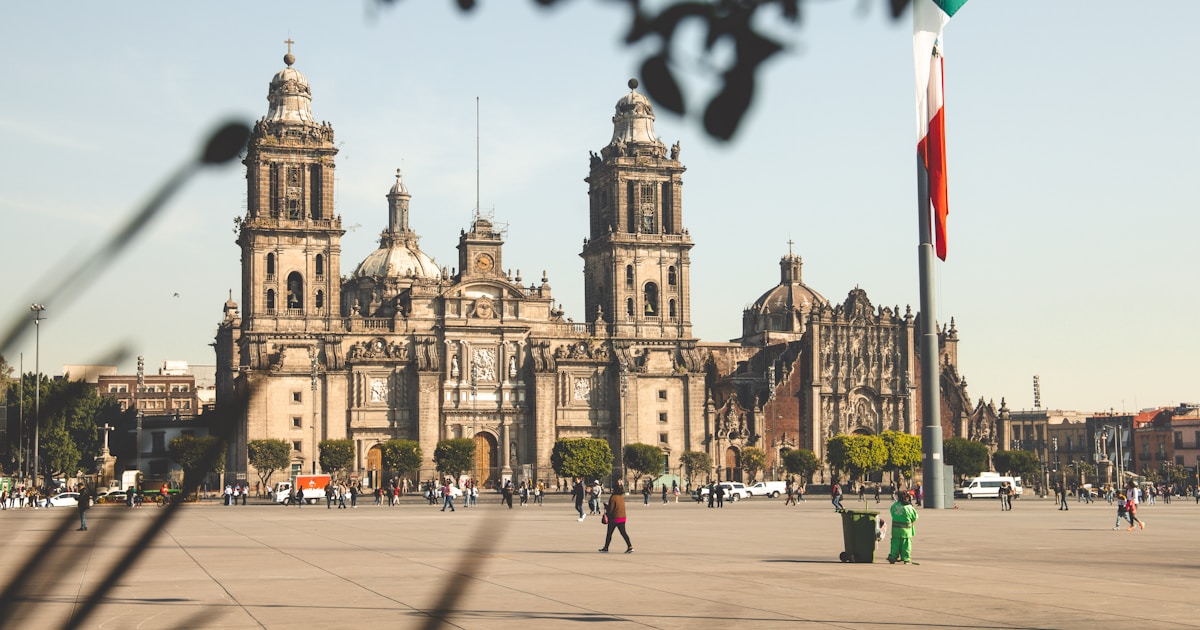
    Line 2 (Blue) — Zócalo and the Historic Center: This line runs east-west through the heart of the city. Get off at Zócalo station to reach the main square and the Cathedral, or at Bellas Artes for the iconic Palacio de Bellas Artes. During the World Cup, expect large fan gatherings and possible public viewing events near the Zócalo — this is where the city’s energy will concentrate on match days. [INTERNAL LINK: Best fan zones and public viewing spots in CDMX for the 2026 World Cup]

    Line 3 (Olive Green) — North-South Backbone: Running from Indios Verdes in the north to Universidad in the south, Line 3 passes through Hidalgo (connecting you to Line 2), Balderas, Centro Médico, and Coyoacán. If your accommodation is in the southern colonias — Roma Sur, Del Valle, Narvarte — this line is your lifeline.

    Line 9 (Brown) — Toward Estadio Azteca’s Vicinity: While no metro station drops you at the stadium’s doorstep, Line 9 and the separate Tren Ligero (light rail) get you close. Take Line 2 to Tasqueña, then transfer to the Tren Ligero southbound — the Estadio Azteca station on that light rail line sits within walking distance of the venue. Expect heavily expanded service during match days.

    Line 1 (Pink) — The Tourist Corridor: Connecting Observatorio to Pantitlán, this line takes you through Chapultepec (for the castle and Bosque de Chapultepec park), Insurgentes, and Salto del Agua near the south end of the Centro Histórico.

    Safety, Etiquette, and Practical Wisdom — Your CDMX Metro Guide for Tourists

    Safety is the question on every visitor’s mind, and the honest answer is: the Mexico City metro is generally safe during daytime and early evening hours, especially on busy routes. That said, every big-city subway system requires awareness, and this CDMX metro guide for tourists would be incomplete without straight talk.

    Keep your phone in your pocket. Petty theft — a quick grab of a smartphone near the doors as they close — is the most common incident. Use your phone freely once seated but tuck it away when standing near exits. A cross-body bag worn in front is ideal for wallets, cards, and small electronics.

    Avoid the metro after 10:00 p.m. when possible. Service runs until midnight, but ridership thins out and stations feel isolated after 10. If your match ends late, rideshare apps like Uber and DiDi are a better bet for the return trip. [INTERNAL LINK: Uber, DiDi, and taxi guide for Mexico City during the World Cup]

    Download a metro map to your phone beforehand. The official STC Metro app (available in Spanish) and Google Maps both show real-time metro routes. Having an offline map means you don’t need cell data underground — coverage can be spotty between stations.

    Watch the gap and the stairs. Some older stations (particularly on Line 1 and Line 9) have narrow platforms and steep stairways. If you are carrying luggage, factor in extra time. Escalators exist at major transfer hubs like Pino Suárez, Balderas, and Hidalgo, but they are not always operational.

    One more cultural note: Mexico City’s metro culture is surprisingly social. Vendors walk through carriages selling everything from candy to USB cables. Street musicians perform between stops. It is part of the experience. Feel free to buy a bag of mazapán — it costs around 10 MXN ($0.55 USD) and tastes like Mexico.

    Pro Tips for World Cup 2026

    • Load at least 100 MXN ($5.50 USD) onto your metro card on Day 1 — this gives you 20 rides and saves you from queueing at ticket windows during the tournament rush.
    • Avoid Line 2 between Pino Suárez and Hidalgo on match days between 11:00 a.m. and 2:00 p.m.; fan crowds heading to Zócalo fan zones will pack these stations. Travel earlier or use Line 3 as an alternative corridor.
    • Wear your team jersey with pride — Mexican fans love the camaraderie — but secure any scarves or lanyards that could get caught in turnstiles or closing doors.
    • Hydrate before descending underground. June and July in Mexico City bring afternoon rains but also warm, humid conditions inside stations. Carry a water bottle; there are no drinking fountains below ground.
    • Screenshot your route before entering the station. Cell reception drops between stops, so having your transfer plan saved offline prevents confusion at busy junctions like Pantitlán or Hidalgo.

    How to Get to Estadio Azteca by Metro

    From the Centro Histórico (Zócalo), take Line 2 (Blue) southbound to the terminal station Tasqueña — roughly a 25-minute ride. At Tasqueña, exit and follow signs for the Tren Ligero (light rail). Board southbound and ride to Estadio Azteca station, about 15 minutes further. The Tren Ligero accepts the same Tarjeta de Movilidad Integrada card and costs an additional 3 MXN ($0.17 USD) per ride. From the light rail station, the stadium entrance is approximately an 8-minute walk east along Calzada de Tlalpan. An Uber or DiDi from Reforma or Roma Norte to the stadium typically costs 120–200 MXN ($6.60–$11 USD) outside of surge pricing. On match days, expect surge pricing and significant road traffic — the metro-plus-Tren Ligero combination is usually faster. [GOOGLE MAPS: Estadio Azteca, Mexico City]

    Mexico City’s metro is not just a way to get around — it is one of the city’s great democratic spaces, a place where office workers, university students, vendors, and now football fans from Seoul, Bogotá, Madrid, and Kansas City all share the same carriages. For World Cup 2026, this 55-year-old system will be your most reliable, cheapest, and most authentically Mexican way to experience the capital. Load your card, memorize your station icons, keep your belongings close, and enjoy the ride. The city is ready for you. [INTERNAL LINK: Complete CDMX World Cup 2026 transportation guide — metro, buses, and rideshares]

    Frequently Asked Questions

    Q: How much does the Mexico City metro cost in 2026?

    A: A single ride costs 5 MXN (about $0.28 USD) regardless of distance. You’ll need a rechargeable Tarjeta de Movilidad Integrada card, which costs approximately 21 MXN ($1.15 USD) at any station’s ticket window. Load credit in advance to skip lines on busy match days.

    Q: Is the Mexico City metro safe for tourists at night?

    A: The metro is generally safe during daytime and early evening, especially on well-traveled lines like Line 1, 2, and 3. After 10:00 p.m., stations thin out and rideshare apps like Uber or DiDi are a better option. Keep phones pocketed near doors and use a cross-body bag for valuables.

    Q: What is the closest metro station to Estadio Azteca?

    A: There is no direct metro station at the stadium. Take Line 2 to Tasqueña, then transfer to the Tren Ligero light rail southbound to the dedicated Estadio Azteca station. From there, it is an 8-minute walk to the stadium entrance along Calzada de Tlalpan.

  • Hello world!

    Welcome to WordPress. This is your first post. Edit or delete it, then start writing!